• Turning the vision into a viable plan

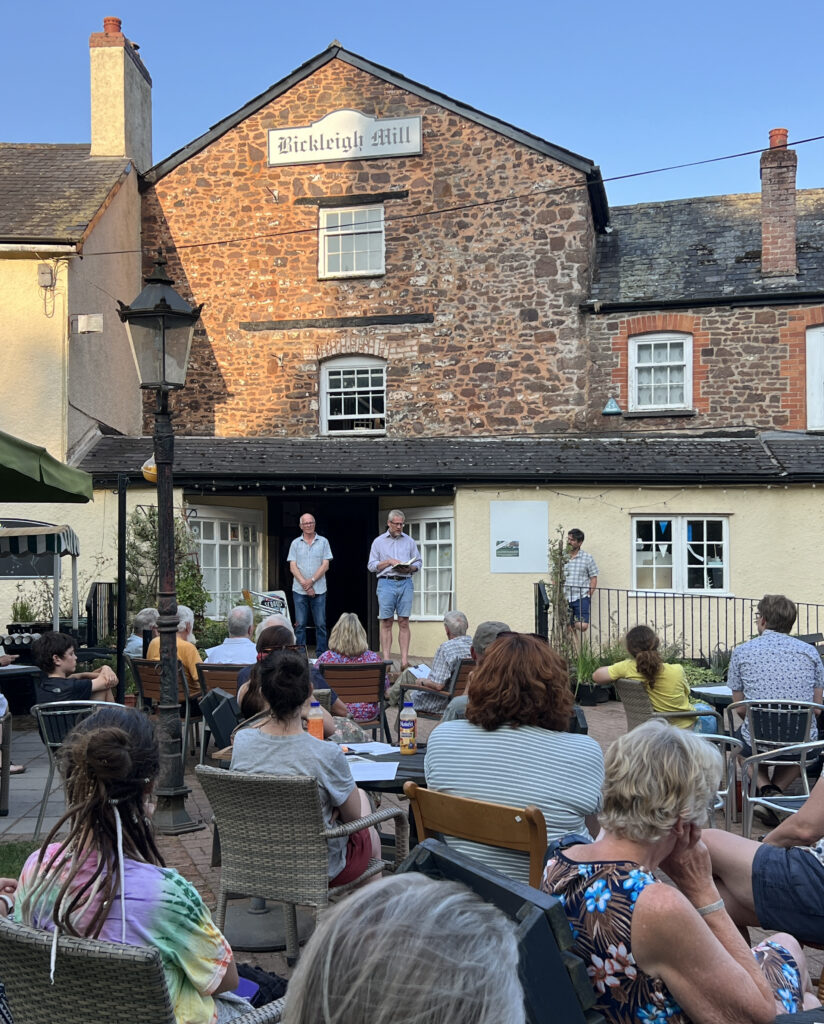
    It was fantastic to welcome so many people to Bickleigh Mill last Tuesday and to hear your passion and ideas for its future. If you couldn’t make it and would like to catch up, you can read Pauline and James’s accounts of the evening to get a flavour of the event.

    Your ideas, together with the support of 749 people and the 384 community questionnaires completed so far, show just how much enthusiasm there is for the project.

    Our focus is now shifting towards becoming ‘investment ready’. That means developing a robust business plan, producing credible financial forecasts and putting the right legal structure in place.

    This work will put us in a much stronger position to approach grant funders, social lenders and potential community investors for the finance needed to purchase and reopen the Mill.

    The long-term vision for the Mill remains ambitious, but achieving it depends on first establishing a viable and financially sustainable core business.

    Everything achieved so far has been made possible by people generously volunteering their time and expertise, and we are hugely grateful to everyone who has helped us reach this point.

    As we move into the next stage, we would particularly like to hear from anyone with experience in business planning, financial modelling, community shares, social investment, legal structures or community business governance.

    If you would like to help, please contact us at info@bickleighmill.org.uk.

  • Community meeting feedback

    Thank you to everyone who joined the Open Meeting on Tuesday 21st July to discuss the future of Bickleigh Mill. We have carefully reviewed every comment, grouped them into themes, and used them to guide the next stage of planning.  We want to reassure you that your views have been heard and are already shaping the project; we have all the raw data so what follows is just a summary of the key themes that we heard and were written down.

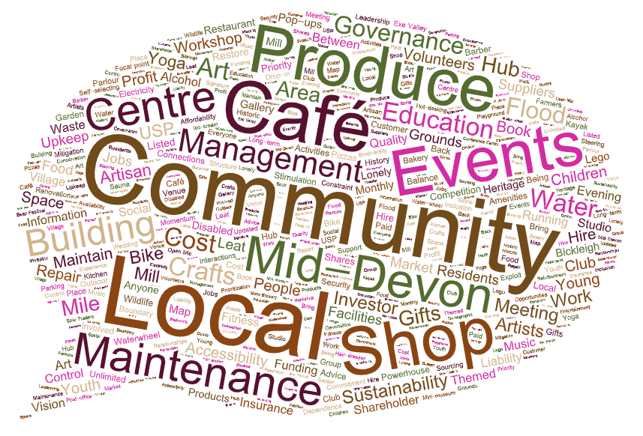
    The ‘word cloud’ image at the end contains every word written down, scaled according to frequency.

    What matters most to you

    • A welcoming café & social hub.   The café was the most frequently mentioned priority. People want a warm, friendly place to meet, relax, and connect—somewhere that becomes the beating heart of the Mill and supports social wellbeing.
    • Local produce, crafts & everyday essentials.   There was strong support for a shop offering daily essentials, local food, and locally made crafts. Many saw this as a practical service for residents and a way to champion local makers.
    • Sustainability & heritage.   Caring for the Mill’s heritage, restoring the waterwheel, protecting biodiversity, and managing water responsibly were important to many participants. Sustainability was seen as central to the Mill’s identity.
    • Accessibility & inclusion.   Improving accessibility—both physical and social—was a clear priority. People want the Mill to be welcoming and usable for everyone.  Many people mentioned welcoming young people.
    • Long‑term Financial Sustainability.   Participants emphasised that the Mill must be commercially viable and resilient, balancing community benefit with financial reality.

    Who are / What is “the Community”

    Most people defined the community broadly. There was no strong desire for strict boundaries; inclusivity was the dominant theme.  The most common descriptions included:

    • Mid‑Devon
    • Bickleigh and surrounding villages
    • A radius of 4–10 miles
    • Anyone who shares the vision

    Your biggest concerns

    • Funding & costs.   People expressed concerns about renovation costs, running costs, insurance, and flood mitigation. Financial risk was a recurring theme.
    • Governance & management.   Participants want clarity on roles, responsibilities, liability, and shareholder voting rights. Good governance is seen as essential for long‑term success.
    • Maintenance & listed building responsibilities.   The Mill’s conservation status and ongoing upkeep were seen as significant challenges that will require careful planning and resources.*
    • Volunteer capacity.   Many highlighted the need for experienced management and a balanced approach to staffing that does not rely too heavily on volunteers.

    *  To Note:  The Mill is in a Conservation Area but it is not listed.

    What you felt was missing

    Several constructive gaps were identified:

    • Better accessibility inside the buildings
    • Information boards and heritage interpretation
    • Education and work experience opportunities
    • Hot‑desking and workspace
    • A community arts centre

    These ideas point to opportunities to broaden the Mill’s role as a learning and creative space.

    What could make Bickleigh Mill unique

    Participants shared many ideas for what could differentiate the Mill from similar venues:

    • Pop‑ups, advice centre, youth club, meeting spaces
    • Mini‑museum and heritage interpretation
    • Artisan food (bakery, ice‑cream), monthly markets
    • Outdoor activities (bike hire, kayak hire, playground)
    • Live music, themed events, beer festival, wedding venue

    These suggestions highlight the potential for a lively, diverse programme that appeals to all ages.

  • Ideas flow at the Mill

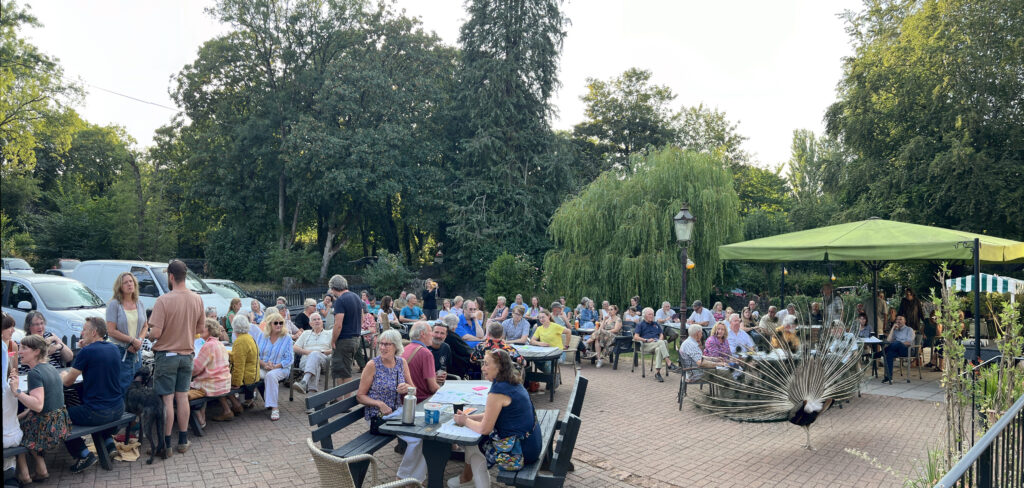
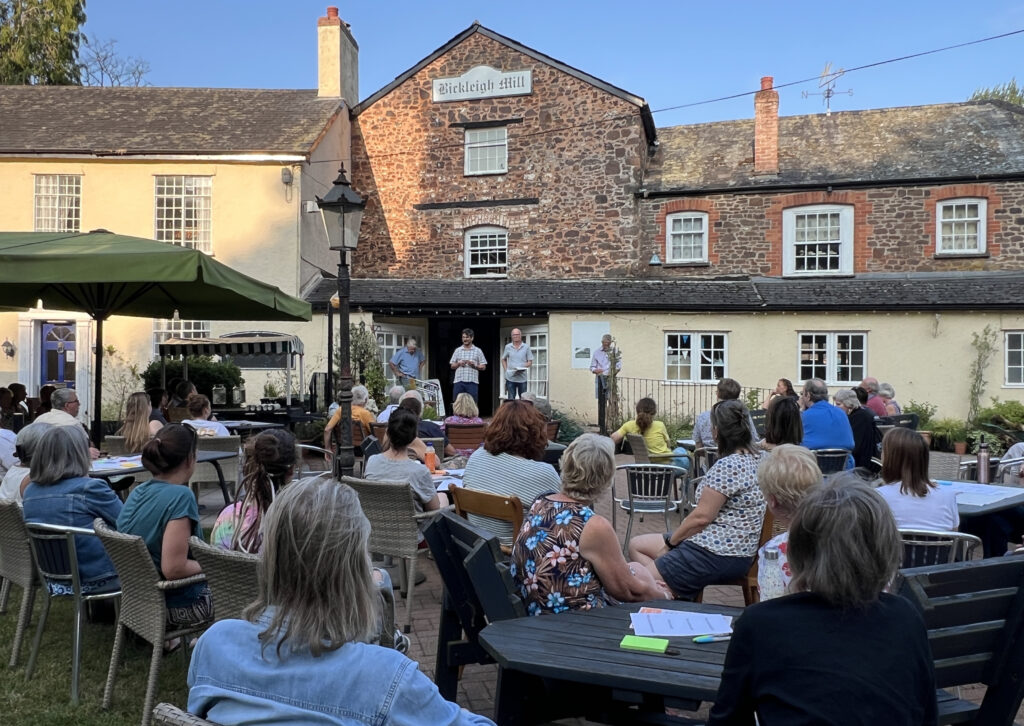
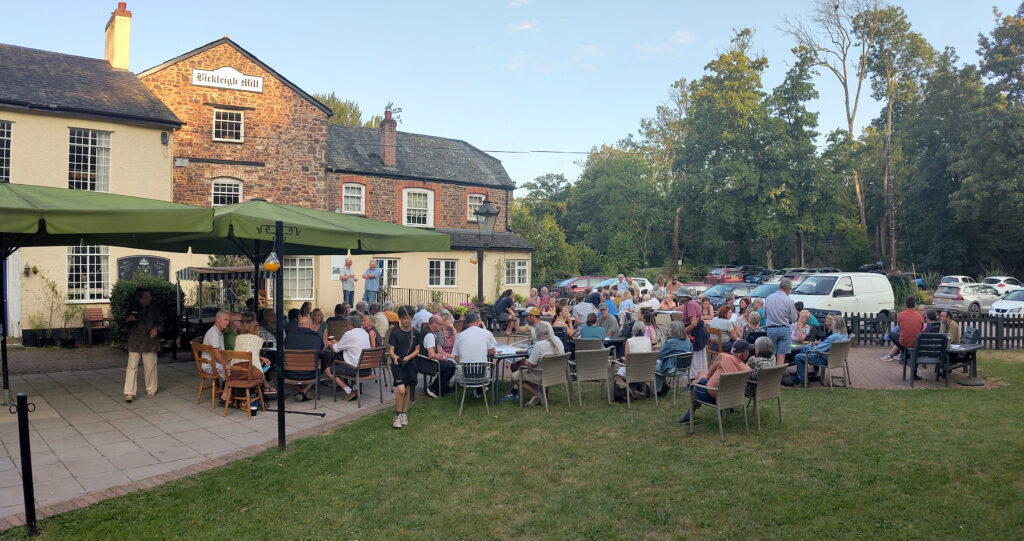
    Providing encouragement for the organisers and sending some scuttling inside to fetch extra chairs, over 100 project supporters were welcomed on Tuesday evening by Michael. Kim, the current mill owner voiced his excitement about the plans and provided some historical background.

    Abounding enthusiasm

    Michael summed up the vision in 2 words : Community business, explaining that business is initially focussed on the café and shop, employing people and generating profit, potentially moving on to hydro power, co-working space, artisan workshops and adopting more ideas from the local community. The community element has at the moment the local environment (flood prevention, habitat restoration) in its sights, looking also to the school and local enterprise.

    How this will be achieved was briefly presented by Steve indicating the need to write the business plan and complete the CBS registration in order to secure funding from various realistic sources.

    Flowing creativity

    James led everyone into discussion in small groups, focussing attention on 4 questions: what is most important? who should benefit? what’s missing? and what’s your greatest concern? The following flow of creativity was phenomenal. Several original and important points were brought up as well as suggestions which have the potential of creating a real community hub – many requiring little or no extra financial support, some which would need a feasibility study prior to implementation. Fortunately the groups were diligent in note-taking and we will be sharing a full digest of the ideas on this page shortly.

    The meeting ended just about on time with Michael indicating next steps with an invitation to get involved, help spread the word, and submit further ideas and/or opinions and feedback. Currently there are 737 supporters and 375 completed questionnaires.

    Our priorities now are to create a detailed business plan and financial forecast, and to register as a Community Benefit Society.

  • Highlights from the community questionnaire

    Over the last few weeks, we have been asking people to complete a short questionnaire to help shape the vision for this project.

    Thanks to everyone that has responded so far. At the time of writing, over 350 people have let us know what it important to them (see below for the current total). This is a lot more than we were expecting, and an encouraging sign that the project has the support of our community.

    There are so many good ideas contained in your responses: suggestions that we had not considered, new people to reach out to, personal connections to the Mill, and offers of support.

    While we have not yet had the time to read though them all, we will do so. Each response will help shape our vision and build the case with funders and others that can support our work.

    There is still time to complete the questionnaire. Complete the support the project form on our homepage and you will receive a link to fill it in. Your answers will be reflected in the charts below. Alternatively, you can download an offline form that you can fill in anonymously.

    We’ll publish a full report once we have had time to read though and digest all our responses. In the mean time, here is a summary of the responses to our ‘multiple choice’ questions.

  • You’re invited to our open meeting

    We hope you will be able to join us at the Mill on Tuesday 21st July from 7pm to 8.30pm.

    We will present our ideas so far, collect your ideas for what you would like to see at the Mill, and answer any questions you have about the project.

    We’re still at an early stage of this ambitious project but we have taken some important steps towards our goals, and we hope that you will be able to join us at the meeting and support us on this journey.

    To help us get an idea of numbers, we would be grateful if you could fill in the form below if you are planning to attend. We will send you a confirmation email, and also a reminder the day before the event.

  • First steps

    The Bickleigh Mill Project steering group got together for the first time on Tuesday 23rd June. Here are our notes from the meeting.

    We were kindly hosted at the Mill by the current owners, Suzanne and Kim. We started with introductions from attendees – Steve Batt, Matt Hayes, Lisa Kill, Tom Knight, Michael McAndrew and James Vigne – and apologies from Tara Fraser, Katherine Vigne and Leah Thompson, who were unable to attend.

    We talked about what the Mill means to us, and why we think this project is so important. We discussed work done so far, talked through priorities and next steps, and discussed risks and concerns for the project.

    The Mill holds a special place in the hearts of many in our community. People have fond memories of visiting as children and many local people gained their first job at the Mill. It has been an important part of the working life of many in the village, and until it sadly closed its doors earlier this year, was a favourite place to meet friends and to socialise. It is a historic, architecturally significant building, and is well known and loved throughout Mid Devon and further afield. However, the longer it remains closed, the more it will deteriorate, and so there is a sense of urgency to get it up and running again as soon as possible.

    We want the Mill to be a place where everyone in our community feels welcome. We want it to complement local businesses and generate employment and training opportunities.

    We want to run the Mill as a community-owned business that generates profits that we can reinvest in our community. Our preferred legal structure is a community benefit society. You can read more about Community Benefit Societies and how they work on the Community Energy England and Plunkett websites.

    The Mill has incredible potential. Everyone we talk to is very enthusiastic about it reopening. However, at the same time, we recognise that this is an ambitious project and there was consensus that key to making it happen would be to focus on doing one thing at a time.

    We agreed that we should focus initially on reopening the cafe and shop. This will allow us to start generating revenue as soon as possible. We can then explore other aspects of the project once this core is up and running. While we may have lots of ideas about how we could use the profits generated to benefit our community, the reality is that we will need to generate some profits before we can distribute them.

    Two key questions we need to address are whether we can raise enough capital to get this project off the ground, and whether we can make it a long-term profitable business. To answer these questions we will prioritise putting a business plan in place that covers the purchase, any necessary refurbishment, and the first 10 years of trading.

    We discussed ballpark figures for the purchase and reopening. £700k to purchase the Mill and £200k to reopen the cafe and shop could be raised through a mixture of sources: £350k of grant funding, £300k through social loans, and £250k from a community share offer.

    By way of comparison, the Globe in Torrington recently raised £230,000 through a community share offer which unlocked a “transformational £526,000 government grant“.

    We discussed what would happen if the Mill became insolvent. The process of liquidation for a community benefit society is defined by law and is similar to that of a ‘normal’ limited company with some variations.

    A key risk at this stage is that the property is sold to another buyer. One way to mitigate this risk is to enter into a conditional sale agreement with the current owners. In order to do this, we would need to have a credible plan in place to raise the funds for the purchase.

    We then turned to next steps.

    We want to arrange an open meeting as soon as possible to present our ideas to the community, answer questions, gather feedback, and generate support. Given that we want and need to move quickly, we agreed to arrange a date for this before the start of the summer holidays.

    In preparation for this meeting, we will continue promoting the project through a variety of means, including posters, flyers, social media, local groups and networks, etc.

    In addition to preparing for the open meeting, we will prioritise developing the business plan and registering as a community benefit society.

    Finally, but perhaps most importantly, we recognised that in order to make this happen, we will need the help of many more people from our community. If you would like to get involved, we would love to hear from you – please email info@bickleighmill.org.uk and let us know how you can help.