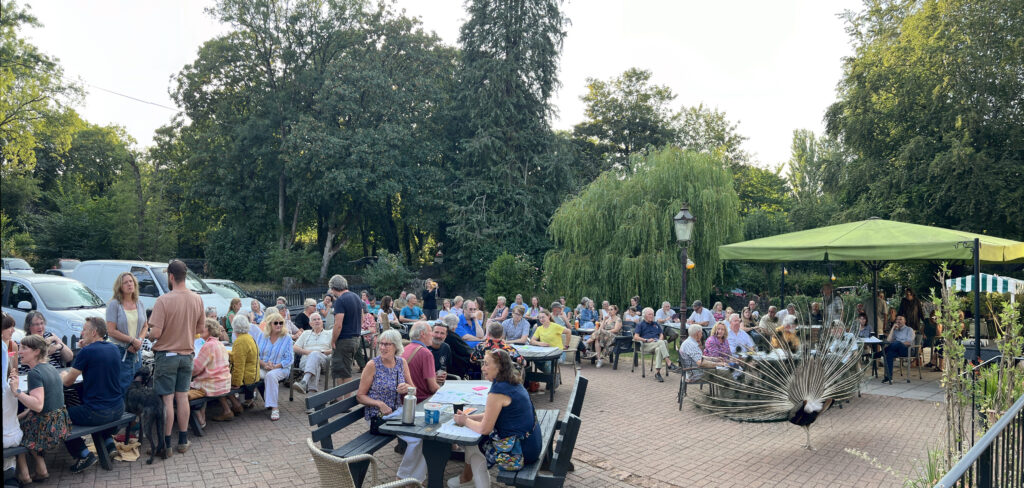
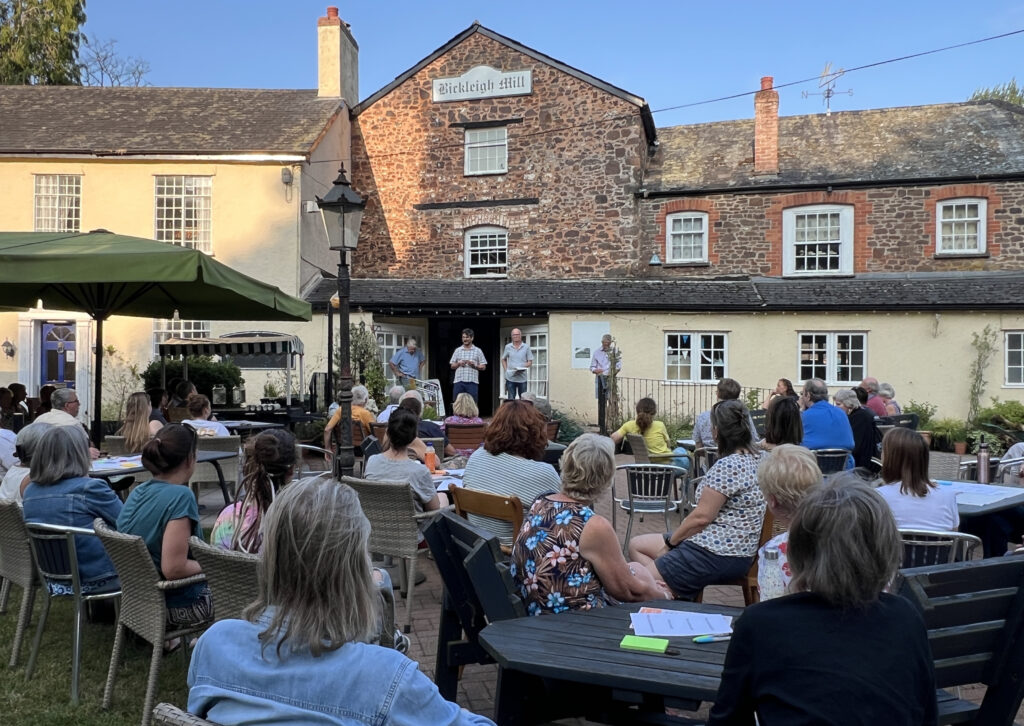
Thank you to everyone who joined the Open Meeting on Tuesday 21st July to discuss the future of Bickleigh Mill. We have carefully reviewed every comment, grouped them into themes, and used them to guide the next stage of planning. We want to reassure you that your views have been heard and are already shaping the project; we have all the raw data so what follows is just a summary of the key themes that we heard and were written down.
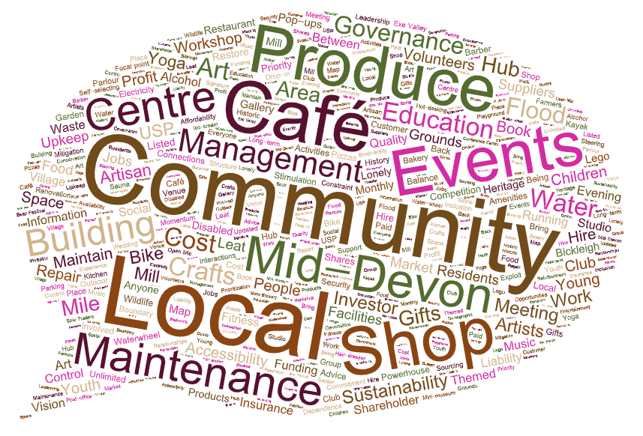
The ‘word cloud’ image at the end contains every word written down, scaled according to frequency.
What matters most to you
- A welcoming café & social hub. The café was the most frequently mentioned priority. People want a warm, friendly place to meet, relax, and connect—somewhere that becomes the beating heart of the Mill and supports social wellbeing.
- Local produce, crafts & everyday essentials. There was strong support for a shop offering daily essentials, local food, and locally made crafts. Many saw this as a practical service for residents and a way to champion local makers.
- Sustainability & heritage. Caring for the Mill’s heritage, restoring the waterwheel, protecting biodiversity, and managing water responsibly were important to many participants. Sustainability was seen as central to the Mill’s identity.
- Accessibility & inclusion. Improving accessibility—both physical and social—was a clear priority. People want the Mill to be welcoming and usable for everyone. Many people mentioned welcoming young people.
- Long‑term Financial Sustainability. Participants emphasised that the Mill must be commercially viable and resilient, balancing community benefit with financial reality.
Who are / What is “the Community”
Most people defined the community broadly. There was no strong desire for strict boundaries; inclusivity was the dominant theme. The most common descriptions included:
- Mid‑Devon
- Bickleigh and surrounding villages
- A radius of 4–10 miles
- Anyone who shares the vision
Your biggest concerns
- Funding & costs. People expressed concerns about renovation costs, running costs, insurance, and flood mitigation. Financial risk was a recurring theme.
- Governance & management. Participants want clarity on roles, responsibilities, liability, and shareholder voting rights. Good governance is seen as essential for long‑term success.
- Maintenance & listed building responsibilities. The Mill’s conservation status and ongoing upkeep were seen as significant challenges that will require careful planning and resources.*
- Volunteer capacity. Many highlighted the need for experienced management and a balanced approach to staffing that does not rely too heavily on volunteers.
* To Note: The Mill is in a Conservation Area but it is not listed.
What you felt was missing
Several constructive gaps were identified:
- Better accessibility inside the buildings
- Information boards and heritage interpretation
- Education and work experience opportunities
- Hot‑desking and workspace
- A community arts centre
These ideas point to opportunities to broaden the Mill’s role as a learning and creative space.
What could make Bickleigh Mill unique
Participants shared many ideas for what could differentiate the Mill from similar venues:
- Pop‑ups, advice centre, youth club, meeting spaces
- Mini‑museum and heritage interpretation
- Artisan food (bakery, ice‑cream), monthly markets
- Outdoor activities (bike hire, kayak hire, playground)
- Live music, themed events, beer festival, wedding venue
These suggestions highlight the potential for a lively, diverse programme that appeals to all ages.